How Surgical Robots Are Transforming US Healthcare
Surgical robots now assist in millions of US operations. A clear look at their benefits, real costs, and the legal cases that exposed serious failures.
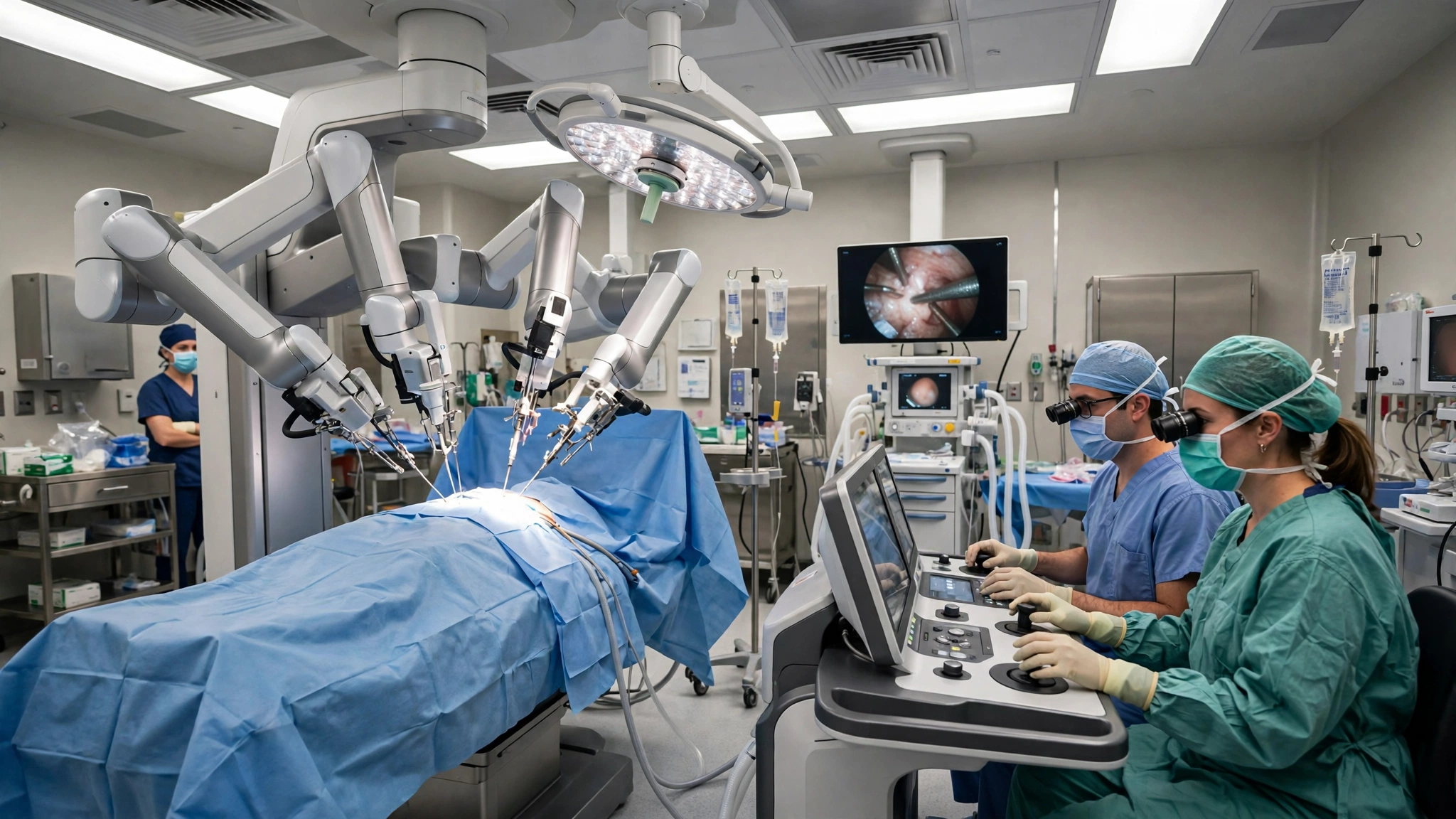
Surgical robots have gone from a novelty in a few academic hospitals to a routine part of American operating rooms. In 2025, surgeons used Intuitive’s da Vinci systems in more than 3.1 million procedures worldwide, and roughly two out of every three of those took place in the United States. Gallbladders, hernias, prostates, colons and uteruses are now regularly removed or repaired by a surgeon sitting at a console a few feet from the patient.
That growth is real, and so are the benefits for many patients: smaller incisions, less blood loss and shorter hospital stays in the right cases. But the story of robotic surgery in the US is not only about better machines. It is also about multimillion-dollar equipment that hospitals feel pressure to keep busy, marketing that has sometimes run ahead of the evidence, regulators who have had to step in, and a $450 million antitrust settlement announced just two weeks ago.
This article looks at how surgical robots are transforming US healthcare from both sides. It covers what the data shows, where robot-assisted surgery clearly helps, where it adds cost without much added value, and what past legal and regulatory cases teach patients and hospitals. Whether you are a patient weighing a robotic operation, a clinician, or someone following the healthcare technology business, the goal here is a clear and honest picture of surgical robots rather than a sales pitch.
Where Surgical Robots Stand in US Healthcare Today
The numbers show how quickly surgical robots have spread. By the end of 2025, Intuitive reported an installed base of about 11,106 da Vinci systems worldwide, up 12% in a year, and roughly 3,153,000 da Vinci procedures, an 18% jump. US procedure volume grew 15%, led by general surgery, and company revenue reached about $10.1 billion.
The pace has held in 2026. Intuitive guided for 13% to 15% procedure growth this year, and in the third quarter it placed 546 systems, up from 427 a year earlier. Surgeons now run more than 10,000 procedures a day on its surgical robots.
Research from Michigan shows how fast the shift happened inside ordinary community hospitals. A study of 73 hospitals published in JAMA Network Open found that operations using surgical robots rose from 1.8% of general surgery cases in 2012 to 15.1% in 2018. For inguinal hernia repair, the share jumped from 0.7% to 28.8%.
How Surgical Robots Actually Work
Despite the name, today’s surgical robots do not operate on their own. A surgeon sits at a console and controls instruments mounted on robotic arms that enter the body through small incisions. The da Vinci surgical system and similar platforms give the surgeon a magnified 3D view, filter out hand tremor, and use wristed instruments that can bend in ways a human wrist cannot inside a small opening.
Every cut and stitch is still the surgeon’s decision. That matters for accountability. When something goes wrong with surgical robots, the question is usually about judgment, training or device performance, not a machine acting on its own.
Who Makes Surgical Robots for the US Market
Intuitive’s da Vinci line dominates soft-tissue robotic surgery in the United States, and its Ion system is used for lung biopsies. Orthopedic surgical robots from companies such as Stryker, Zimmer Biomet and Smith+Nephew assist with knee, hip and spine work. Medtronic and several smaller firms are trying to compete in soft-tissue surgery, but none comes close to Intuitive’s US footprint. That concentration shows up again in the legal section below, because it shapes what hospitals pay for instruments and repairs.


7 Ways Surgical Robots Are Transforming US Healthcare
Some of these changes are clearly good for patients. Others are mixed, and a few are warning signs. Here is an honest look at each.
1. More Operations Are Minimally Invasive
The biggest clinical change is that more procedures that once needed a large open incision can now be done through several small ones. Surgical robots have made complex minimally invasive surgery, such as removing a prostate deep in the pelvis or part of the rectum, more practical for surgeons who never felt comfortable doing it with standard laparoscopic tools.
The catch is that the Michigan data suggested surgical robots were often replacing conventional laparoscopy, which is already minimally invasive and usually cheaper, rather than replacing open surgery. In hospitals that bought their first surgical robots, the earlier steady rise in laparoscopic surgery flattened out once the robot arrived.
2. Shorter Hospital Stays and Faster Recovery, in the Right Cases
For many patients, the benefits of surgical robots are tangible:
- Smaller incisions and less visible scarring
- Less blood loss during the operation
- Less pain afterward in many procedures
- Shorter hospital stays and a quicker return to normal life
Most of those gains come from avoiding a large open incision. When the comparison is with laparoscopic surgery instead, the gap often shrinks to little or nothing for common operations like gallbladder removal. Patients should ask what the alternative is, not just whether surgical robots are available.
3. Better Ergonomics for Surgeons
Surgeons have long reported neck, back and shoulder injuries from hours of leaning over an operating table. Sitting at a console is easier on the body, and many surgeons say surgical robots let them work longer into their careers. That benefit is real, but it belongs to the surgeon. It should never be the main reason a specific patient is steered toward a robotic operation.
4. Hospitals Now Compete on Technology and Marketing
Owning surgical robots has become a selling point. Hospital billboards and websites promote their surgical robots, and patients increasingly ask for them by name. Once a hospital spends well over a million dollars on surgical robots, plus yearly service contracts, there is financial pressure to keep it busy. That pressure is not illegal, but it becomes an ethical problem when it nudges surgeons to use a robot for cases that would go just as well without one.
5. Healthcare Costs Are Shifting, Not Always Falling
Surgical robots add healthcare costs at several stages:
- Capital cost. In older filings, Intuitive priced da Vinci systems between about $1.0 million and $2.3 million, depending on setup.
- Instruments. Instruments for surgical robots are built for a limited number of uses before they must be replaced.
- Service contracts. Yearly maintenance agreements add a recurring bill.
- Operating room time. Setup and docking can lengthen cases, especially early in a surgeon’s experience.
Insurers often pay the same for a procedure whether or not surgical robots are used, so hospitals absorb much of the difference, and those costs eventually reach everyone through prices and premiums. The value case for surgical robots is strongest in complex operations and weakest in simple, high-volume ones.
6. Training Has Become a Patient Safety Issue
Surgical robots do not make an inexperienced surgeon experienced. Results with surgical robots improve as surgeons move up the learning curve, and hospital credentialing standards vary widely. The FDA urges providers to complete training specific to each robotic procedure they perform and advises patients to ask about a surgeon’s training, experience and outcomes. That is a core patient safety issue, and it is a recurring theme in the lawsuits covered below.
7. Oversight of Surgical Robots Is Catching Up
The fast growth of surgical robots has drawn more attention from the FDA, courts, insurers and researchers. There is now more outcome data, more registry tracking, and more legal scrutiny of how surgical robots are sold, serviced and used. That oversight is part of the transformation too, and it exists largely because of the failures in the next section.
Legal and Ethical Failures Involving Surgical Robots
Any honest look at surgical robots in US healthcare has to include the cases where things went wrong. Some involved confirmed regulatory violations. Others are allegations that were settled without any admission of wrongdoing. That difference matters, so it is noted for each case.
The 2013 FDA Warning Letter Over Unreported Safety Fixes
In July 2013, the FDA sent Intuitive Surgical a warning letter after an inspection found the company had mailed safety-related notices to hospitals without reporting them to the agency, as federal device rules require. According to Fierce Biotech’s coverage, the notices covered possible instrument issues and clarified the system’s approved uses. One of them was a revised manual for transoral surgery that added a warning against use in children.
Intuitive submitted corrective actions, and the FDA closed the warning letter in April 2014. The lesson still applies. When a maker of surgical robots handles safety fixes quietly, regulators and other hospitals lose the ability to spot patterns across the country.
Robotic Cancer Surgery Without FDA Authorization
In February 2019, the FDA warned that it had never authorized any robotically assisted device for mastectomy or for preventing or treating cancer, and that it knew surgeons were using surgical robots for those purposes anyway. The agency also cited research, including a 2018 New England Journal of Medicine trial, linking minimally invasive radical hysterectomy for early cervical cancer to worse outcomes than open surgery.
The FDA laid out those concerns in its 2019 safety communication on robotic cancer surgery. In 2021, it updated that guidance for mastectomy. It reminded hospitals that studies of robotic mastectomy are significant-risk research that requires an approved investigational device exemption, and it acknowledged allegations that some studies were running without that oversight. Doctors can legally use cleared devices off-label, but experimenting on patients without required protections crosses both legal and ethical lines.
The Repair Monopoly Lawsuit and the $450 Million Settlement
Hospitals have complained for years about what it costs to restock and repair surgical robots. In 2021, several hospitals filed suit, alleging Intuitive illegally tied the sale of da Vinci systems to its own service contracts and blocked independent companies from refurbishing EndoWrist instruments. In a 2024 ruling, the court found that a separate antitrust aftermarket exists for EndoWrist repair and replacement and that Intuitive held monopoly power in it. The court certified a nationwide class of hospitals in March 2025.
In October 2026, Intuitive agreed to a one-time $450 million payment plus agreed changes to its practices to settle the case, without admitting liability. The deal still needs a federal judge’s approval. A related case from independent repair firm SIS went the other way, with the judge ruling for Intuitive in January 2025, and SIS has appealed. A third case, from Restore Robotics, was dismissed in November 2025 and is also on appeal.
For patients, the effect is indirect but real. When hospitals pay more to buy, maintain and restock surgical robots, that cost flows into the wider price of care.
Product Liability Lawsuits Over Patient Injuries
Intuitive has faced many product liability suits tied to its surgical robots in state and federal courts. Plaintiffs have claimed injuries and, in some cases, deaths after robotic procedures, alleging design defects, inadequate training support for surgeons, and failure to disclose risks. The company disputes these claims, and many cases have been settled or dismissed, so they are not proof the device caused harm. They do point to a pattern of surgical robots being adopted faster than training and evidence could keep up.
Kickbacks Elsewhere in the Device Industry
Kickback cases from the wider device industry show the kind of conflicts that programs built around surgical robots also need to guard against. In 2019, Sanford Health agreed to pay $20.25 million to settle allegations involving kickbacks a neurosurgeon received through his own device distributorship, along with medically unnecessary spinal surgeries. In 2023, DePuy Synthes paid $9.75 million to resolve allegations that it gave a surgeon free products to induce him to use its devices. Neither case involved surgical robots, but both show why money flowing between surgeons, hospitals and device makers deserves close scrutiny whenever expensive technology is involved.
Ethical Questions to Ask Before Robotic Surgery
The ethical core of robotic surgery is informed consent. A patient should understand not only that surgical robots will be used, but why, and what the alternatives are. Before agreeing to an operation with surgical robots, it is fair to ask:
- Why is a robotic approach better than laparoscopic or open surgery for my specific condition?
- How many of these exact procedures have you done with the robot, and what are your complication rates?
- Is this use cleared by the FDA, or is it off-label?
- Will my insurance cover it, and will I pay more out of pocket?
- Do you or the hospital have any financial ties to the robot’s manufacturer?
Good surgeons welcome these questions. Vague answers or irritation are a reasonable signal to get a second opinion.
What Hospitals Using Surgical Robots Owe Patients
Hospitals that invest in surgical robots should track results by surgeon and procedure, set clear credentialing rules, report adverse events promptly, and avoid advertising that overstates benefits. Buying decisions should rest on patient need, not on keeping up with the hospital across town.
The Future of Surgical Robots in America
The next phase of surgical robots in the US will likely bring more competition, smaller single-port systems, new approved uses and more software. Intuitive’s da Vinci 5 received FDA clearance in January 2026 for certain cardiac procedures, including mitral valve repair, and its single-port system gained new uses in late 2025, including gallbladder removal and hernia repair. More competitors entering the US market could push down prices for surgical robots, instruments and service.
Artificial intelligence and data tools are also being built into newer surgical robots, from performance feedback for surgeons to recorded video review. These tools could improve training and quality tracking. They also raise new questions about patient data privacy, legal liability, and how much authority software should have in the operating room.
The direction is clear: surgical robots will keep spreading through American hospitals. The open question is whether evidence, fair pricing and oversight grow at the same speed.
Conclusion: Surgical Robots Need Honest Oversight
Surgical robots are changing US healthcare in ways that are both real and uneven: they have made minimally invasive surgery possible for more patients and eased the physical strain on surgeons, yet they have also raised hospital costs, often replaced cheaper laparoscopic methods without clear added benefit, and produced a track record that includes an FDA warning letter for unreported safety fixes, federal warnings about unauthorized cancer uses, injury lawsuits, and a $450 million antitrust settlement over repair practices. The technology itself is not the problem. The problems come from how surgical robots are sold, priced, regulated and used, so the best results will come when patients ask direct questions, hospitals track outcomes openly, and regulators keep pace with the growth of surgical robots across American operating rooms.